Job
enquiry:+91-9121642626
Job
enquiry:+91-9121642626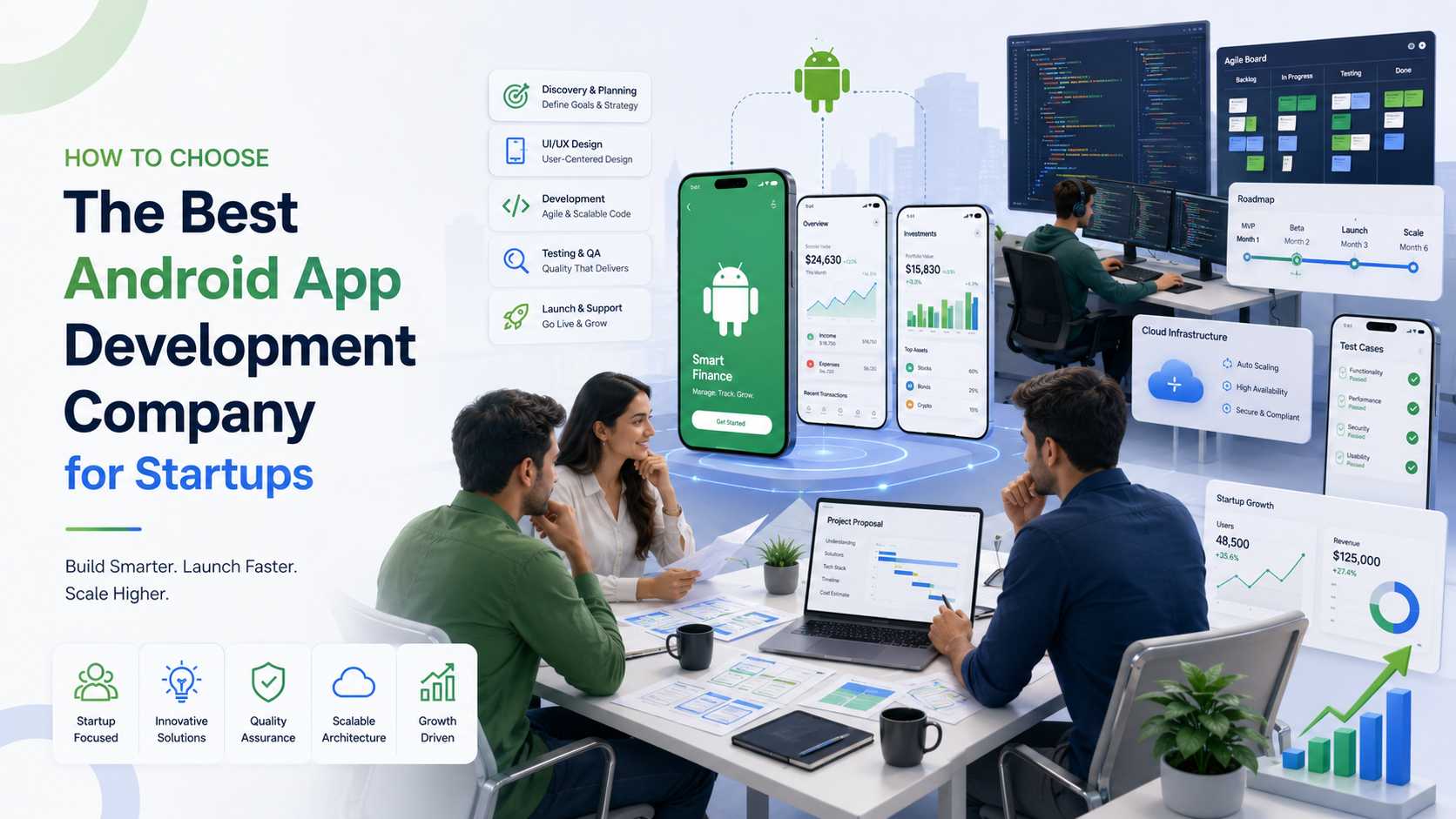
How to Choose the Best Android App Development Company for Startups
Every startup starts with an idea, but turning that idea into an app people actually use comes down to who builds it. For most founders, that means choosing an Android app development company — and it's a decision that shapes your cost, your timeline, and often whether the product works at all. Pick well and you get a partner who helps shape your idea into something real. Pick badly and you lose months and money you probably don't have to spare.
This guide is written for founders. It covers how to get ready before you start, what actually makes a good Android partner for a startup, the questions worth asking, and the warning signs to take seriously.
First, a quick note on Android vs iOS
Many founders try to launch on Android and iOS at once. For a startup on a tight budget, that's often a mistake — building two native apps doubles the cost and time. It's usually smarter to start with one platform, validate the idea, then expand.
Which one? It depends on your audience. Android has by far the larger global user base, especially in India, Southeast Asia, Africa, and Latin America, which makes it the natural first choice for many startups. iOS users tend to spend more on apps in markets like the US and Western Europe, so if that's your audience, iOS first can make sense. There's also a third route worth knowing: cross-platform frameworks like Flutter and React Native let you build for both from one codebase, often cutting cost by a third to a half — frequently the most practical option for a first launch. Decide based on where your users actually are.
Before you start: get your idea ready
A good development partner can build almost anything, but they can't read your mind. A little preparation makes everything that follows smoother.
Validate the idea first. A brilliant app idea is still just a hypothesis until real people use it. Research what your potential users actually want and what competing apps get wrong (their reviews are a goldmine). The clearer the problem you're solving, the better.
Plan a minimum viable product (MVP). Resist the urge to launch with everything. List every feature you can imagine, then cut it down to the essentials that solve the core problem. An MVP is cheaper to build, faster to launch, and — most importantly — gets you real user feedback before you spend big. Almost every successful app started small.
Sketch the experience. A simple wireframe of your key screens and how users move between them helps everyone picture the app and makes your conversations with developers far more productive.
Set a rough budget and timeline. Be honest with yourself about both. It helps you compare companies fairly and weeds out partners who aren't a fit.
What to look for in an Android partner for a startup
This is the heart of the decision. Startups have specific needs — speed, budget discipline, and a partner who can advise, not just code — so look for these:
A relevant portfolio, ideally with startup work. Look at apps they've built, especially Android apps and especially for startups or early-stage products. Try the apps where you can; live work in the Play Store is the most honest proof of quality. A partner who's helped startups before understands the constraints you're working under.
Startup-friendly thinking. The best partner for a startup won't just take your spec and build it — they'll help you scope an MVP, push back on features that don't earn their place, and help you get to market fast. That advisory mindset is worth a lot when you're figuring things out as you go.
The right technical skills. For Android, that means strong Kotlin (and Java) skills, or cross-platform expertise (Flutter, React Native) if you're going that route, plus solid back-end and cloud ability. Ask what they'd recommend for your app and why — a good answer weighs the trade-offs rather than pushing a default.
A clear, agile process. Startups change direction often, so you want a partner who works in short cycles, shows you progress regularly, and adapts as you learn. Ask how they handle changes mid-project and who your point of contact will be.
Strong communication. You'll work closely with this team, so responsiveness and clarity matter. How quickly and clearly they answer during the sales conversation is a fair preview of the whole project.
Transparent pricing. Get clear, itemised pricing rather than a vague lump sum, and be cautious of a quote far below the rest — it often means inexperience or costs that appear later. Think value, not just the lowest number.
Post-launch support. Your app isn't done at launch. Confirm they offer maintenance and updates, and that you'll own the code and IP. A partner who sticks around matters, especially when your product is still evolving.
How to find and vet candidates
A few practical ways to build and check your shortlist:
- B2B review platforms like Clutch and GoodFirms list development companies with verified reviews and ratings — a good starting point.
- Portfolios show you the range and quality of a company's work and which platforms they're strong on.
- Client testimonials and references are gold. Where you can, actually talk to a past client (ideally another startup) about deadlines, communication, and whether they'd hire the company again.
- Independent reviews across a few sources help you spot patterns rather than relying on any single opinion.
After you've hired: getting to launch
Once you've chosen a partner, a few things keep the project on track:
- Register your developer account. To publish on the Play Store, you'll need a Google Play Developer account — a one-time $25 fee (you can register as an individual or under your company).
- Build in analytics. Add analytics from day one to track downloads, engagement, and retention, so you can see how the app is really doing.
- Launch, then learn. Your first users are your best source of truth. Watch how they behave, read their feedback, and feed it into the next round of improvements. Plan for ongoing updates — the apps that succeed keep getting better.
Red flags to watch for
- A quote far below everyone else's, or vague pricing with no detail.
- No verifiable Android portfolio, references, or independent reviews.
- Slow or unclear communication during the sales stage.
- Reluctance to assign you IP ownership or sign an NDA.
- No mention of testing or post-launch support.
- A team that says yes to everything without ever advising you — startups need a partner who'll push back.
Frequently asked questions
How do I choose the best Android app development company for my startup? Prepare your idea and MVP first, then look for a partner with relevant Android (and ideally startup) experience, strong technical skills, an agile process, clear communication, transparent pricing, and post-launch support. Check portfolios, references, and independent reviews before deciding.
Should a startup build for Android or iOS first? It depends on your audience. Android has the larger global user base (and dominates in India, Southeast Asia, and many emerging markets), while iOS users tend to spend more in markets like the US. Building one platform first, or going cross-platform with Flutter or React Native, is usually smarter for a startup than launching both natively at once.
How much does it cost to publish an Android app? A Google Play Developer account is a one-time $25 fee. Building the app itself varies widely depending on its complexity and who builds it — starting with an MVP keeps the initial cost down.
Why should a startup start with an MVP? An MVP — the simplest version that solves the core problem — is cheaper and faster to build, and it gets your app in front of real users sooner so you can learn what they actually want before investing in more features.
What questions should I ask an Android app development company? Ask about relevant past projects, the technology they'd use and why, their development and testing process, how they handle changes, who you'll work with day to day, IP ownership, and what post-launch support they provide.
Bringing your startup's app to life
Choosing the right Android development partner is one of the most important early decisions a startup makes. Prepare your idea, scope a lean MVP, and look for a partner who combines real Android experience with the startup-friendly mindset to help you get to market fast — and who'll stick with you after launch.
At Tvisha Technologies, we help startups turn ideas into Android apps, from MVP to launch and beyond. Learn more about our startup app development and Android app development services, or get in touch for a free consultation. (For broader guidance, see our guide on choosing a mobile app development company and our app development cost guide.)






 Whatsapp
 Email
Email